A personal trainer certification (typically Level 4 in Ireland) qualifies you to work with clients, deliver fitness sessions, and pursue a range of careers in the fitness industry.
If you’re wondering what you can do with a personal training qualification, here you’ll find every career path, task, and progression route available once you’re certified.
Contents:
- What Can You Do With A Personal Trainer Certification?
- What Tasks Does a Level 4 Personal Training Certification Qualify You to do?
- What Career Options Can You Pursue With a Personal Trainer Certification?
- What Further Courses Can You Do After A Personal Trainer Certification?
- Personal Trainer Certification FAQs
What Can You Do With A Personal Trainer Certification?
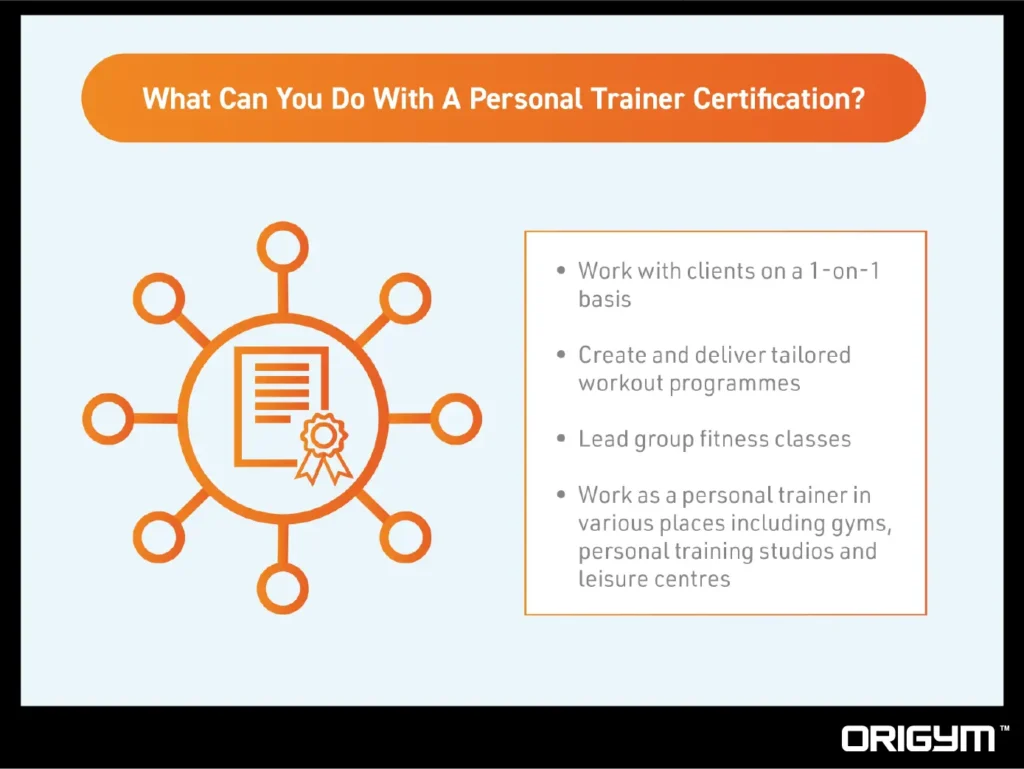
A certified personal trainer can work with clients 1-to-1, design bespoke fitness programmes, lead group sessions, provide general nutrition guidance, work in gyms or studios, train clients online, and operate on a self-employed basis.
By gaining a Level 4 Personal Trainer Certification, you can work as a personal trainer in various places, such as:
- Gym
- Personal Trainer Studio
- Leisure Centre
Once qualified and after gaining enough experience, you can start your own personal trainer business, building your own client base and working on a self employed basis.
What Tasks Does a Level 4 Personal Training Certification Qualify You To Do?
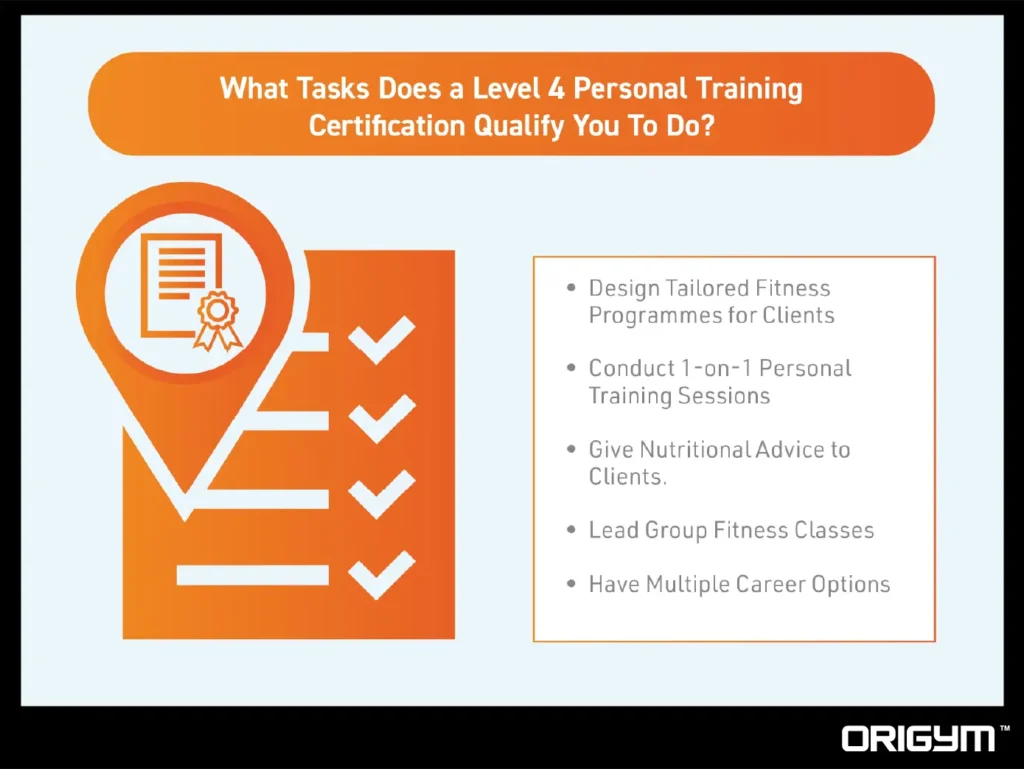
A Level 4 personal trainer certification qualifies you to design programmes, deliver 1-to-1 sessions, provide general nutrition advice, lead group training, and work across a range of fitness settings.
Here are 5 of the main tasks to answer your question of – what can I do with a personal training qualification?
#1 – Design Tailored Fitness Programmes for Clients

After gaining your Level 4 Personal Training qualification, you’ll learn how to create tailored exercise programmes based on a client’s individual needs, goals, and abilities.
It’s important to note that designing personalised fitness programmes is something only qualified Level 4 Personal Trainers can do.
For example, if you’ve only completed a Level 3 Gym Instructor course, you will not be qualified to take on this responsibility.
Personalised fitness programmes are more effective as they take several factors into account, including:
- Current fitness levels
- Specific goals
- Health conditions or injuries
- Individual strengths and weaknesses
As a personal trainer, you’ll usually supervise clients on the gym floor during sessions to ensure they perform exercises safely and correctly.
However, programmes should also be simple enough for clients to follow independently, helping them maintain progress outside of regular training sessions.
#2 – Conduct 1-on-1 Personal Training Sessions

When you become a personal trainer, one of the main tasks you will perform is 1-on-1 sessions with clients following a customised workout programme.
These sessions will usually last around 40 minutes to an hour and you will guide the clients through the programme you’ve created. This will involve demonstrating exercises, counting reps, and checking their form.
#3 – Give General Nutritional Advice to Clients

During a Level 4 Personal Trainer Course, you will learn about the foundations of food and nutrition. You will then be able to provide clients with nutrition advice that supports their workout programme and facilitates their goals.
For example, if a client wants to gain muscle, you would be qualified to give them advice on the kinds of foods they should be eating, such as suggesting some high protein snacks they could include in their diet.
However, as a Level 4 Personal Trainer, you can only provide general nutrition advice and recommendations. You cannot prescribe meal plans for specific dietary or medical requirements.
#4 – Lead Group Fitness Classes

Most gyms and fitness centres will want to hire personal trainers who can fulfil multiple responsibilities.
For example, in addition to training clients on a 1-to-1 basis some employers will want candidates to lead group fitness classes.
Some examples of popular group fitness classes you can teach as a Level 4 Personal Trainer are:
- Indoor cycling
- Circuit training
- Aerobics
Be aware that your Level 4 Personal Training qualification doesn’t qualify you to teach popular branded fitness classes like Les Mills or Zumba. You will need to enrol with the brand itself and earn a specialist qualification.
What Career Options Can You Pursue With A Personal Trainer Certification?
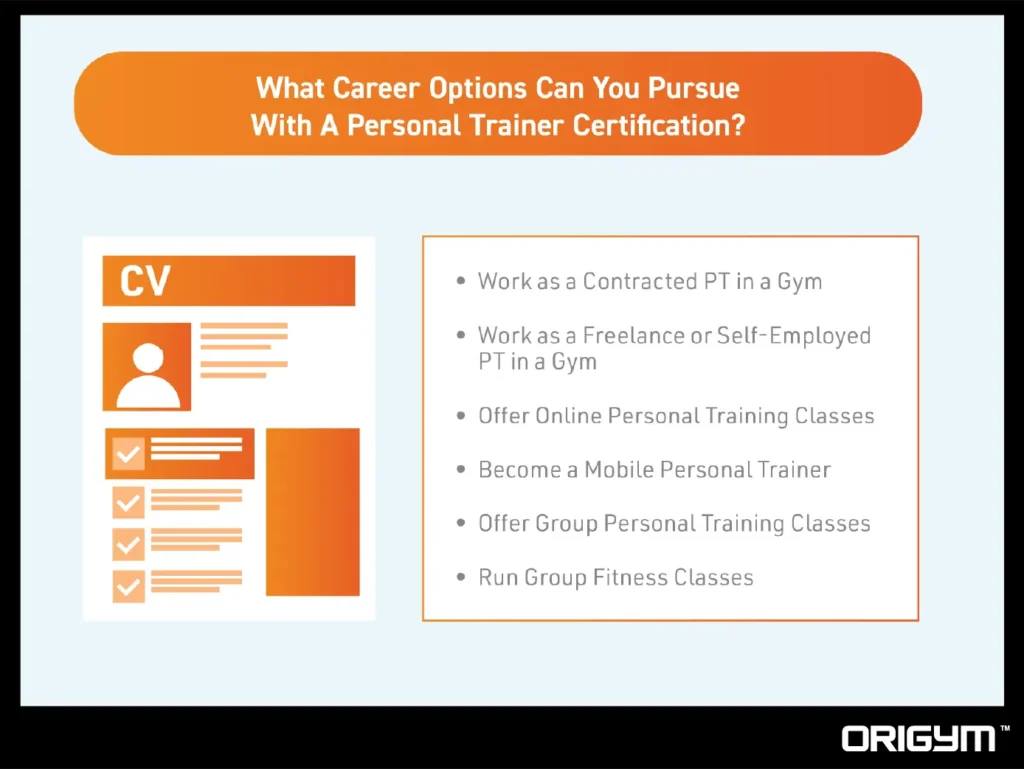
There are a host of personal trainer career options and specialist areas you will be able to embark on once qualified.
#1 – You Can Work as a Contracted PT in a Gym

In order to work as a personal trainer in a gym, employers will typically require you to hold a Level 4 Personal Training qualification as a minimum.
Contracted personal trainers usually work at one main gym location on either a part or full time contract. They work set hours and receive a regular salary.
Working as a contracted PT is a great option for newly qualified trainers as it offers several key benefits:
- Stable income: Receiving a consistent wage makes it easier to manage finances and plan for the future
- Structure and routine: Working fixed hours provides stability and helps create a reliable work schedule
- Access to potential clients: Gym members are already interested in fitness, making it easier to attract and build a client base
- Valuable industry experience: You’ll gain hands on experience working on the gym floor, delivering fitness classes, and supporting members
If you qualify with OriGym, you’ll also receive access to our post course support, including interview guidance and personal trainer CV advice to help you secure gym based roles.
#2 – Work as a Freelance or Self-Employed PT in a Gym

Another popular career option is to become a freelance personal trainer.
This allows you to work across multiple gyms, expand your client base, and build your reputation on a larger scale.
There are two main ways to work as a freelance PT in a commercial gym:
- Work set hours for the gym in exchange for using their facilities to train clients
- Pay a fixed monthly rental fee to train clients independently at the gym
The first option is often the best place to start if you’re new to the industry. It allows you to build experience, grow your client base, and keep 100% of the money you earn from sessions.
This setup is ideal for beginner freelance personal trainers as it allows you to gain clients without investing anything other than your time.
The second option is also popular, but you’ll need to pay rent to use the gym facilities, meaning part of your income goes towards gym fees. For example, this is how many roles at PureGym operate.
Regardless of which route you choose, there are plenty of benefits to becoming a freelance personal trainer:
- Increased earning potential: Set your own rates and increase your prices as you gain experience and grow your client base as well as your personal trainer salary.
- Greater flexibility: Work the hours that suit you without being tied to fixed shifts or unsociable schedules.
- Find your niche: Choose the type of clients you want to work with and build a career that aligns with your goals.
#3 – Offer Online Personal Training Classes

Online personal training can involve a wide range of roles, such as:
- Training clients one-to-one via video software such as Zoom or Teams.
- Creating bespoke programs for clients that they do in their own time.
- Conducting check ins via social media.
- Posting interesting content on social media to increase engagement.
To become an online personal trainer, you only need a Level 4 Personal Training certification. This means you don’t need any additional specialist qualifications to make your service virtual and work on a self-employed basis!
Some of these benefits include:
- You will have less outgoing costs. Since you can operate from your own home, you won’t have to pay outgoings such as renting a space, travel costs or giving a cut of your earnings to a gym.
- You can take on a wider range of clients. As you won’t be limited by location, you can technically take on clients from all over the world!
- You will have greater freedom and flexibility. By not having to travel to a specific location to train clients, you will have more time to pursue other commitments, such as a part-time job, childcare or studying.
#4 – Become a Mobile Personal Trainer

By becoming a mobile personal trainer, you’ll travel to clients instead of working from a gym. Common locations include:
- Clients’ homes
- Workplaces
- Outdoor spaces, such as local parks
Like online personal training, mobile PTs are usually self employed, giving you the flexibility to set your own schedule and work around other commitments.
Working as a mobile personal trainer can also help you expand your client base, including clients outside your local area and those unable to travel to a gym.
#5 – Offer Group Personal Training Classes

Group personal training allows you to train multiple clients at once, helping you increase your earnings within the same amount of time.
In fitness classes, everyone follows the same choreographed routine together, whereas group PT sessions can involve clients completing different exercises at different times.
Training several clients at once also means balancing different fitness levels, goals, and abilities while giving equal attention to everyone in the session.
One of the biggest benefits of group personal training is the increased earning potential.
For example, if you charged €20 per person for a one hour group session and €45 for a one to one session, you would only need three clients to earn more money for the same amount of time spent training.
#6 – Run Group Fitness Classes

Although teaching fitness classes is often part of a gym role, you can also turn it into your own business by running independent group sessions.
There are many different types of fitness classes you could offer, including:
- Bootcamps
- HIIT workouts
- Aerobics
- Indoor cycling
- Kettlebell training
Running group fitness classes also comes with several benefits:
- Develop your niche: Specialising in a certain class type, such as dance aerobics or HIIT, can help you stand out in the fitness industry and charge higher prices as your reputation grows
- Creative freedom: Designing your own classes allows you to share your passion for exercise while creating engaging workouts for clients
- Social interaction: Teaching classes involves meeting and motivating different people every day, making it a highly rewarding and community focused role
What Further Courses Can You Do With A Personal Trainer Certification?
A Level 4 Personal Training qualification is the minimum requirement needed to work as a personal trainer.
However, many trainers choose to continue their education with Level 5 qualifications to specialise in specific areas of fitness and increase their earning potential.
Level 5 is the highest qualification level for personal trainers and allows you to work with a wider range of clients, including those with specialist health or performance needs. Developing a personal trainer niche can also help you stand out in the industry and charge higher rates for your expertise.
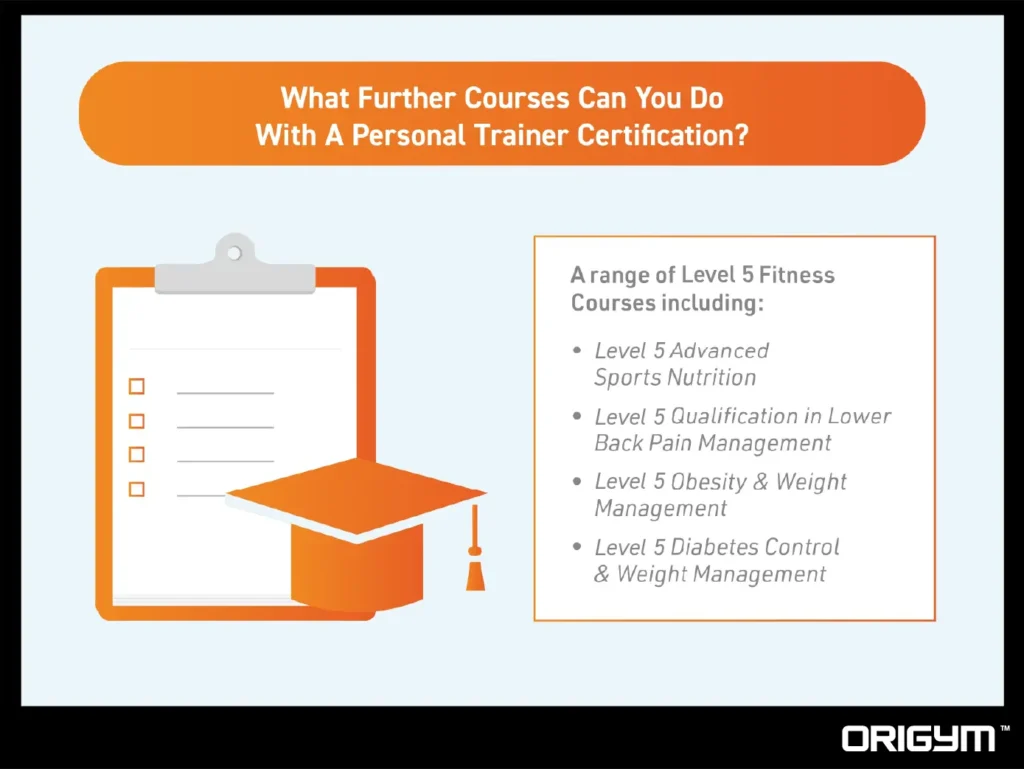
At OriGym, we offer a range of Level 5 Personal Training Courses, including:
- Level 5 Advanced Sports Nutrition Course: Qualifies you to create meal plans and provide nutritional guidance for clients.
- Level 5 Lower Back Pain Management: Enables you to design specialist programmes for clients experiencing lower back pain.
- Level 5 Obesity & Weight Management: Prepares you to support obese clients with long term weight loss and weight management goals.
- Level 5 Diabetes Control & Weight Management: Qualifies you to create training programmes for clients with Type 1 and Type 2 diabetes.
By progressing from Level 4 to Level 5, you can expand your client base, develop specialist expertise, and open up new career opportunities within the fitness industry.
You Can Attract a Unique Demographic
As a level 5 trainer, you can take on a wider range of clients, compared to just being qualified up to level 4.
For example, if you have a Level 5 Qualification in Obesity & Weight Management, you will have the knowledge to train clients with obesity or other weight-related issues. This can increase your earnings as you will be able to expand your client base.
Charge More for Your Services
As a level 5 trainer, you will be a specialist in a specific area of fitness. Since you’re offering a higher level of service, clients will be willing to pay more for your sessions.
For example, a personal trainer with a nutrition qualification can offer specialist coaching to clients, as well as customised meal plans.
This is an extra service many clients will be happy to pay more for, compared to a Level 4 Personal Trainer who isn’t qualified to offer nutrition plans.
Increase Your Employability
If you’re looking for a contracted role as a personal trainer, a specialist in a particular area of fitness can help you have an edge over other applicants.
Additional qualifications make you more appealing to potential employers because the more qualified you are, the better personal trainer you will be!
Personal Trainer Certification FAQs
What is a Personal Trainer Certification?
A personal trainer certification is a recognised fitness qualification that allows you to work professionally as a personal trainer.
The minimum requirement is typically a Level 4 Personal Training qualification. This certification teaches you how to design personalised workout programmes, support clients safely, and help people achieve their fitness goals.
What Certification Should a Personal Trainer Have?
Personal trainers should have a Level 4 Personal Training qualification as a minimum.
This is the industry standard qualification required to work as a PT in gyms, health clubs, or as a self employed trainer. As there are various personal trainer qualification levels, many trainers also complete Level 5 specialist courses to expand their expertise and increase earning potential.
You should also ensure your qualification is CIMSPA-endorsed as these standards will significantly increase your job prospects.
What Can a Certified Personal Trainer Do?
A certified personal trainer can create tailored fitness programmes, coach clients, and help people achieve specific health and fitness goals.
Qualified personal trainers can work in gyms, run fitness classes, offer online coaching, provide one to one training, and specialise in areas such as nutrition, weight management, or injury rehabilitation.
What Can I Do With a Personal Training Qualification?
A personal training qualification can lead to a wide range of fitness industry careers.
After qualifying, you can work as a gym based PT, freelance trainer, online coach, group fitness instructor, or specialist Level 5 trainer. Many personal trainers also go on to start their own fitness businesses or specialise in niche areas of the industry.
Ready to Begin Your Personal Trainer Career?
OriGym specialises in helping beginner and experienced fitness professionals reach their career goals, which is why we’re one of the most trusted providers of health & fitness courses.
For more information on the range of courses we offer to kickstart an exciting career, download our course prospectus or enquire about our Personal Trainer Diploma.